Configuration Lifecycle Management (CLM): Time for a New Approach

Introduction to CLM
What is Configuration Lifecycle Management
Configuration Lifecycle Management (CLM) is not a system or solution; it’s an approach to solving product configuration challenges.
This approach helps manufacturers tackle complex configuration challenges and streamline their product customization processes across all stages, from design to service.
Companies That Are on a Configuration Lifecycle Management (CLM) Journey
What Does CLM Do
Managing Complexity Across the Product Lifecycle
Configuration Lifecycle Management (CLM) manages the complexity of designing, manufacturing, selling, and servicing customizable products.
It ensures end-to-end alignment, efficient automation, and zero errors, providing manufacturers with the tools needed to meet growing customer demands for personalization.
How Does CLM Work
Creating a Shared Source of Truth for Customizable Products
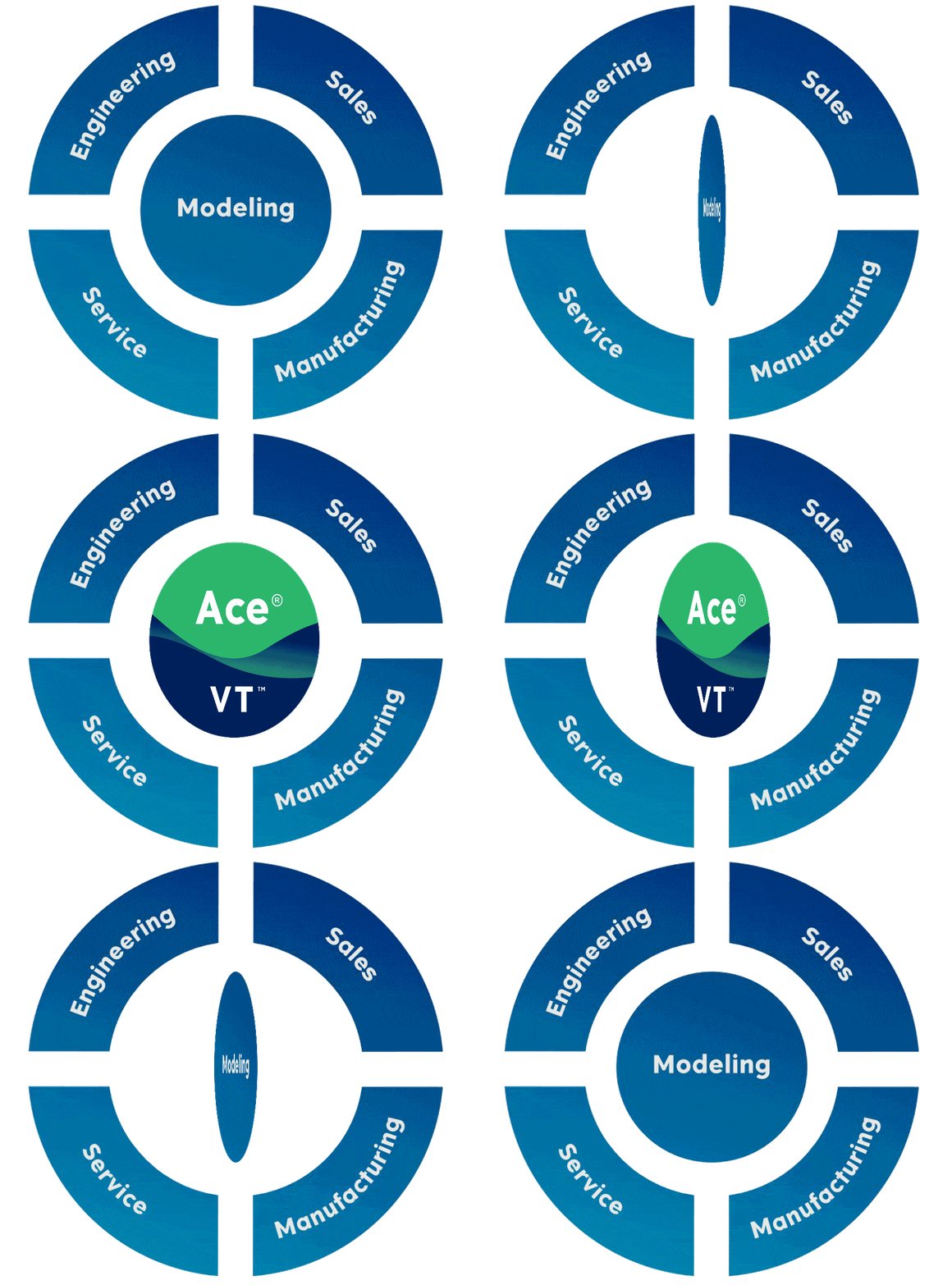
CLM establishes a “shared-source-of-truth” for configurable product options and rules.
This enables these options and rules to be defined collaboratively and consumed efficiently by all departments, ensuring consistency and reducing errors across the entire organization.

CLM (Configuration Lifecycle Management) is really helping us to adopt the digital way of working to change our processes. Having in mind the best-in-class processes which are already embedded in the CLM approach."
Key Benefits of CLM
Why CLM is a Game-Changer for Manufacturers

The Benefits of Implementing a CLM Approach with Configit Ace®
Faster time to market
Faster order handling
Faster sales configuration
Errors
Digital Transformation
Enabling Digital Transformation Across the Enterprise
Digital transformation often fails when implemented in isolated silos across engineering, manufacturing, sales, and service.
Configuration Lifecycle Management (CLM) connects these functions by providing a shared, cross-functional view of all product configurations without replacing existing systems.
By establishing a common, trusted shared source of truth that each department can understand and use, CLM enables true enterprise-wide collaboration and maximizes the value of digital transformation initiatives.
CLM and AI
A Trusted Foundation for AI-Driven Manufacturing
Manufacturers are exploring the use of AI and Gen-AI to automate processes. But manufacturing processes require determinism that AI alone cannot deliver.
Configuration Lifecycle Management (CLM) provides governed product data, configuration logic, and validation needed to support deterministic AI automation.
From Complexity to Confidence
One Trusted Foundation for Product Configuration
A CLM approach transforms fragmented product data and configuration rules into a trusted foundation across engineering, sales, manufacturing, and service.
By aligning configurable product information across existing systems, CLM enables faster decisions, zero errors, and more reliable execution from design to delivery.
As demand for customization continues to rise, CLM gives manufacturers the flexibility to adapt, scale, and future-proof their operations as products, markets, and customer expectations evolve.
Manage Complexity with Confidence
Align configurable product options and rules across the enterprise.
Enhance Your Existing Systems
Extend the value of PLM, ERP, CRM, CPQ, and other enterprise systems by connecting product data and rules into a shared source of truth.
Scale for Long-Term Adaptability
Support increasing customization, evolving product portfolios, and changing business requirements with accurate, consistent, and governed configuration data.
Experience Configuration Lifecycle Management in Practice
See how a CLM approach simplifies manufacturing complexity, eliminates errors, and aligns your organization end-to-end through a live demo or a conversation with a CLM expert.